
Monarch Bay Optometry | Dana Point, California
September means back to school, but for many Dana Point families it also means back to soccer fields, baseball diamonds, basketball courts, volleyball gyms and other fall sports.
September is also Sports Eye Safety Month, an annual observance promoted by Prevent Blindness to educate families about sports related eye injuries and the importance of proper eye protection.
We spend plenty of time thinking about helmets, shin guards and mouthguards. But there’s another piece of protective equipment that’s easy to overlook:
The eyes.
Did You Know?
According to the newest data released by Prevent Blindness, more than 44,000 sports related eye injuries were treated in the United States in 2025. Basketball had the highest rate of eye injuries among people age 15 and older, while pool and water sports led among children age 14 and younger.
That’s a pretty good reason to give our kids’ eyes a little extra attention.
Which Sports Put Kids’ Eyes at Risk?
It’s easy to imagine an eye injury occurring in baseball when a small ball is traveling at high speed. But sports don’t need a small, fast moving ball to present a risk.
A ball, finger, elbow, racquet or another player can cause an injury surprisingly quickly.
The American Academy of Pediatrics’ HealthyChildren.org provides guidance for parents about eye protection for different sports and explains that sport specific safety standards exist for protective eyewear.
“But My Child Already Wears Glasses”
Regular prescription glasses are designed to help your child see. They aren’t designed to provide adequate protection from sports related impact.
The American Academy of Pediatrics notes that regular glasses and sunglasses do not provide enough protection for sports. Most protective sports eyewear is made with impact resistant polycarbonate.
And what about contact lenses?
Contact lenses can provide excellent vision during sports, but they do not provide eye protection. Appropriate protective eyewear can be worn over contact lenses.
Good Vision Can Affect Sports Performance Too
Eye care for young athletes isn’t only about preventing injuries.
Think about everything your child’s visual system may be doing during a single play:
Tracking a moving ball. Judging distance. Following teammates. Shifting focus. Reacting to movement. Using peripheral vision.
A child may not complain about blurry vision because they may assume everyone sees the way they do.
That’s one reason a comprehensive eye examination can be particularly valuable for young athletes.
What If My Child Gets Hit in the Eye?
Some sports related eye injuries are obvious. Others may initially seem minor.
Pay attention to symptoms such as persistent pain, significant redness or swelling, blurred or decreased vision, double vision, new flashes or floaters, sensitivity to light, or difficulty opening or moving the eye.
If vision changes following an eye injury, seek prompt evaluation.
The Right Protection Depends on the Sport
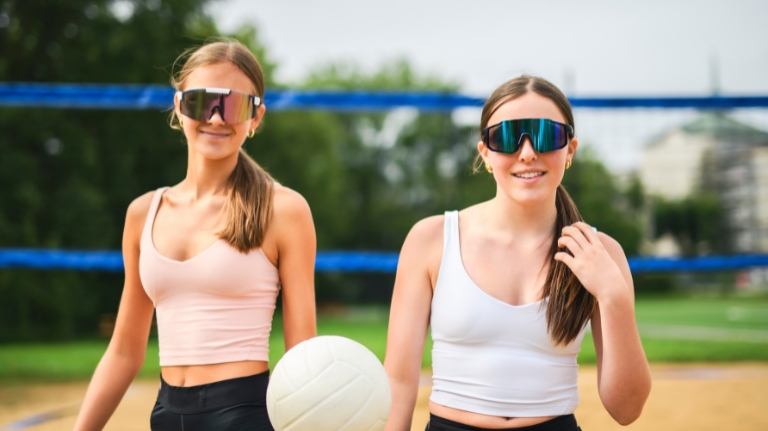
There isn’t one pair of goggles that’s appropriate for every athlete.
The type of protective eyewear should be selected based on the sport, the athlete’s prescription and the type of potential impact.
Prevent Blindness provides additional Sports Eye Safety Month information for parents and athletes about preventing eye injuries.
Don’t Forget the Southern California Sun
Living in Dana Point means our kids have the opportunity to spend a lot of time outdoors.
For outdoor activities when sports goggles aren’t required, sunglasses with appropriate UV protection can help protect the eyes from ultraviolet exposure. A hat or visor can provide additional protection.
The National Eye Institute also recommends sunglasses and appropriate protective eyewear as part of keeping your eyes healthy.
September Is a Great Time for an Athlete’s Eye Check
Your child’s sports physical checks many important aspects of their health, but it isn’t the same as a comprehensive eye examination.
At Monarch Bay Optometry in Dana Point, we evaluate more than whether a child can simply read 20/20 on an eye chart. We can assess prescription, eye health and other aspects of visual function.
Help Protect Their Eyes Before the Next Game
You remembered the cleats. You remembered the uniform. You remembered the water bottle.
Don’t forget their eyes.
In recognition of Sports Eye Safety Month, consider adding an eye exam to your family’s fall checklist.
Schedule an Appointment for your child or teenager at Monarch Bay Optometry in Dana Point, California. We’ll make sure they’re seeing clearly and help determine whether they could benefit from vision correction or protective sports eyewear.
Because protecting their vision may be one of the most important pieces of sports equipment you give them.

