
November has arrived in Dana Point. The days are getting shorter, the air is getting cooler, Thanksgiving is around the corner, and suddenly we are driving home in the dark again.
Your eyes notice the change too.
At Monarch Bay Optometry in Dana Point, November is one of our favorite months to remind patients about a few things that are surprisingly easy to overlook. From unused vision benefits to dry eyes, nighttime glare and even what is on your Thanksgiving plate, here is your November eye health checklist.
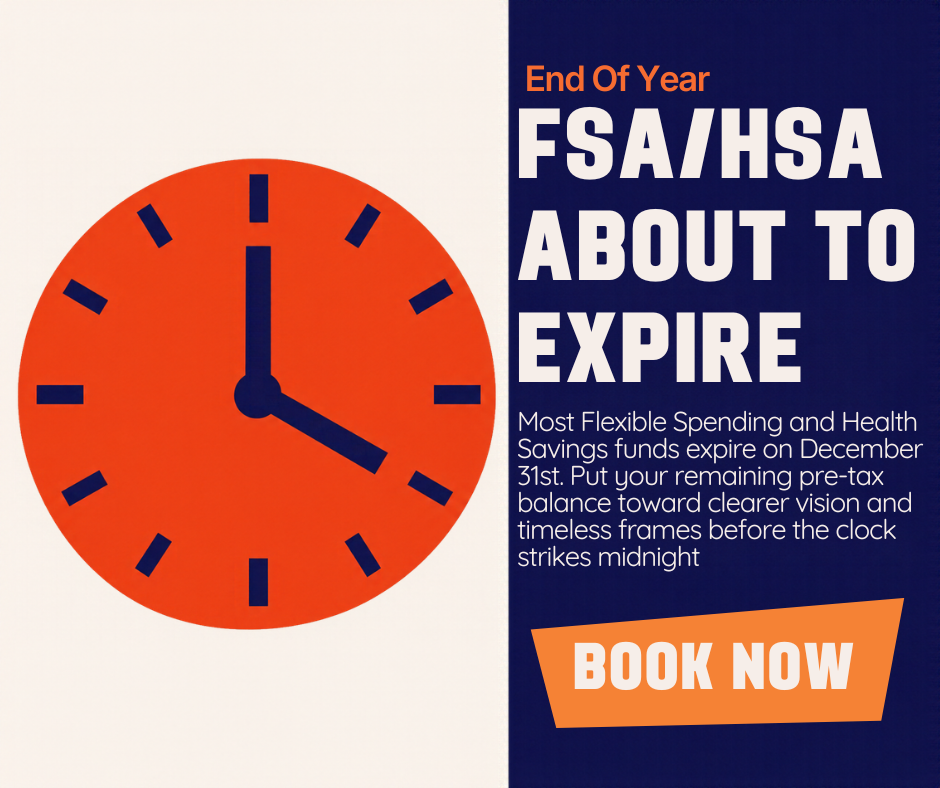
1. Do Not Let Your Vision Benefits Disappear With the Year
November is a great time to check your vision insurance benefits and your FSA balance.
Many Flexible Spending Accounts are subject to “use it or lose it” rules, although some employers allow a limited carryover or grace period. HSA funds are different. They generally stay in your account and roll over from year to year.
Depending on your plan, eligible FSA or HSA funds may be used toward eye exams, prescription glasses, contact lenses and other qualified vision expenses.
Did you know? Waiting until the last week of December can mean limited appointment availability and less time to order glasses or contact lenses.
If you have been putting off your eye exam, November is a much calmer time to take care of it.
2. Build a Thanksgiving Plate Your Eyes Will Be Thankful For
Thanksgiving dinner gets a bad reputation, but some traditional Thanksgiving foods contain nutrients that play important roles in eye health.
Sweet potatoes are rich in beta carotene, which your body can convert to vitamin A. Vitamin A is essential for normal retinal function. Spinach and other dark leafy greens contain lutein and zeaxanthin, carotenoids found in the retina. Turkey also provides zinc, an important mineral involved in normal retinal function.
So yes, enjoy the stuffing. Just make some room for the colorful stuff too.
Did you know? The National Eye Institute’s AREDS research has extensively studied lutein, zeaxanthin and zinc in relation to age related macular degeneration. That does not mean everyone needs an eye vitamin, but it does reinforce how important nutrition can be to overall eye health.
3. Why Do My Contact Lenses Suddenly Feel Like Sandpaper?
If your contact lenses felt wonderful all summer and suddenly feel less comfortable, November may be partly responsible.
Cooler air, lower humidity, wind, indoor heating and seasonal allergens can all contribute to an unstable tear film. Contact lenses sit directly on that tear film, so when the ocular surface gets dry, your lenses may be the first place you notice it.
Did you know? Dry eye is not always about having too few tears. Many patients have tears that evaporate too quickly because the oil glands in their eyelids are not functioning properly.
At Monarch Bay Optometry, we can evaluate the ocular surface and meibomian glands to determine why your eyes are dry rather than simply telling you to keep using more artificial tears.
Depending on the cause, treatment may include home care, prescription therapy and in office dry eye treatments such as IPL or radiofrequency.
4. Turn on the Heat, Dry Out Your Eyes
That first chilly evening when you turn on the heater feels wonderful. Your eyes may disagree.
Heated indoor air can reduce humidity and increase tear evaporation. Add some Santa Ana winds outside and your eyes can start feeling gritty, burning, watery or tired.
Try a humidifier in frequently used rooms, avoid having a heater blowing directly toward your face, take regular breaks from screens, stay hydrated and wear sunglasses outdoors on windy days.
The American Academy of Ophthalmology also recommends adding moisture to indoor air during winter and protecting the eyes from drying winds.
Did you know? Watery eyes can actually be a symptom of dry eye. An irritated ocular surface can trigger reflex tearing, but those watery tears may not remain on the eye long enough to solve the underlying problem.
5. Winter Sun Can Be Sneakier Than Summer Sun
Sunglasses are not just a summer accessory.
Lower winter sun angles can create intense glare, particularly while driving near the coast or when sunlight reflects from water, pavement and car surfaces.
Polarized sunglass lenses are designed to reduce reflected glare, which can make outdoor vision feel more comfortable and improve visual clarity in bright conditions.
Did you know? Polarization and UV protection are not the same thing. When choosing sunglasses, you want appropriate UV protection even if the lenses are polarized.
For Dana Point living, a great pair of polarized sunglasses can be useful year round.
6. November Is National Diabetes Month, and Your Eyes May Know More Than You Think
Diabetes can damage tiny blood vessels throughout the body, including those in the retina.
The tricky part is that diabetic retinopathy may develop before a person notices obvious vision changes. That is why retinal evaluation is so important for people with diabetes.
The CDC recommends regular dilated eye examinations for people with diabetes and emphasizes that early diagnosis matters because treatment can begin before significant vision is affected.
Did you know? Diabetes can affect more than the retina. Changes in blood sugar can temporarily alter vision, and people with diabetes also have increased risks for several eye problems.
Clear vision does not necessarily mean everything inside the eye is healthy.
7. Do Not Let the Dark Drive You Crazy
When daylight ends earlier, patients often start telling us, “I just don’t see as well driving at night anymore.”
Nighttime glare can be affected by an outdated glasses prescription, astigmatism, dry eye, cataracts and other changes in the eye. Dirty or scratched lenses do not help either.
A current prescription and high quality anti reflective coating can reduce distracting reflections from the front and back surfaces of your lenses. If nighttime driving has become noticeably harder, however, do not automatically assume it is just age. It is worth finding out why.
Did you know? Your pupils become larger in dim conditions. That can make optical imperfections more noticeable at night than they are during the day.
Give Your Eyes a November Tune Up
November is the perfect transition month. Before the holiday rush begins, check your remaining vision benefits, replenish your contact lenses, update your glasses, address that nagging dry eye and make sure your eyes are ready for darker evenings.
And while you are at it, have another helping of spinach and sweet potatoes. Your eyes will not object.
If it has been a while since your last comprehensive eye examination, visit Monarch Bay Optometry in Dana Point or book your appointment online.
Sources
CDC: Vision Loss and Diabetes
CDC: Taking Care of Your Eyes
National Eye Institute: AREDS and AREDS2
American Academy of Ophthalmology: Dry Eye
IRS: Health Savings Accounts and Flexible Spending Accounts