

TikTok Said It, But Is It True?
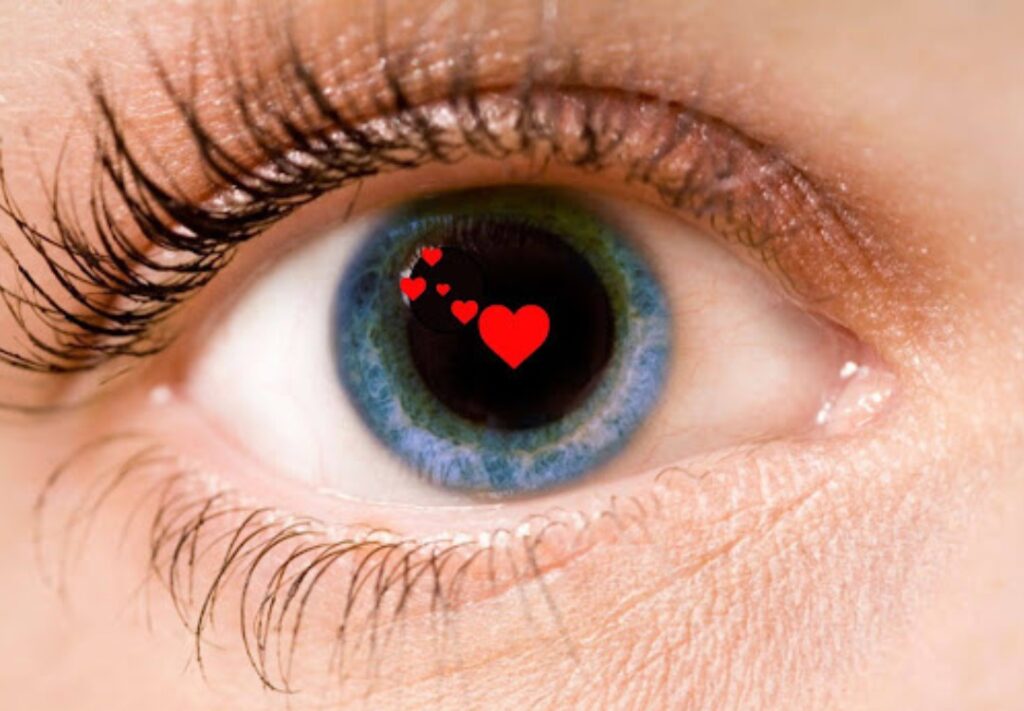
You’ve probably seen it on your For You Page: “If someone’s pupils get big around you, they like you.”Cue the dramatic music and the person staring intensely into their crush’s eyes trying to measure their irises. But is there actual science behind this, or is TikTok just being TikTok?
Spoiler alert: It’s mostly true, but it’s also way more complicated (and interesting) than a 15-second video can explain.
As an optometrist at Monarch Bay Optometry in Dana Point, pupil behavior is something we look at every single day. So let’s break it all down: the science, the romance, the drugs, and yes, even your online shopping cart.
First Things First: What IS Pupil Dilation?
The pupil is the dark circle in the center of your eye. It’s actually an opening — a window that lets light into the back of your eye. The colored ring around it (the iris) contains tiny muscles that control how big or small that opening gets.
- Dilation (mydriasis): Pupil gets bigger — letting in more light (or more of life’s excitement)
- Constriction (miosis): Pupil gets smaller — limiting light intake
Your pupils are constantly adjusting, and they’re controlled by your autonomic nervous system. The part of your nervous system that runs on autopilot. You don’t decide to dilate your pupils any more than you decide to make your heart beat. It just happens.
The Two Big Categories: Natural vs. Chemical Dilation
🌿 Natural (Physiological) Dilation
Your body naturally dilates your pupils in response to several triggers and this is where it gets fascinating.
1. Low Light
The most basic reason: when it’s dark, your pupils open wide to let in as much light as possible. This is pure survival biology.
2. The “Fight or Flight” Response (Sympathetic Nervous System)
When you’re excited, scared, aroused, or deeply focused, your sympathetic nervous system kicks in releasing adrenaline (epinephrine). This causes your pupils to dilate as part of a full-body alert response. Your heart rate goes up, your muscles tense, and your eyes open wide to take in as much visual information as possible.
3. Emotional Arousal & Attraction
Here’s where TikTok gets its facts (sort of) right. Research shows that pupil size increases during emotionally charged moments, whether pleasant or unpleasant. Studies confirm that pupil diameter enlarges when people experience emotional arousal, and this response correlates with sympathetic nervous system activity.
Even more fascinating: when two people’s pupils dilate together (called pupil mimicry), it actually promotes trust and social bonding through activation of the brain’s theory-of-mind network. So when you’re gazing into someone’s eyes and both of your pupils are growing your brains are literally syncing up. Science is romantic.
4. Mental Effort & Cognitive Load
Your pupils also dilate when your brain is working hard solving a puzzle, making a big decision, or… scrolling through 47 tabs of online shopping options.
5. Viewing Something You Love or Find Beautiful
Classic research (and more recent studies) confirms that pupils dilate in response to pleasurable stimuli, not just people, but things you desire. More on this below. 👀
💊 Chemical (Drug/Medication-Induced) Dilation
This is where things get clinical and where your optometrist’s brain lights up.
Medications Used in Eye Exams
When you come in for a dilated eye exam, we use specific eye drops to temporarily widen your pupils so we can examine the back of your eye (retina, optic nerve, blood vessels). Common agents include:
- Tropicamide (Mydriacyl): A drop that relaxes the iris muscles and dilates the pupil, typically used 15–20 minutes before an exam.
- Cyclopentolate (Cyclogyl): Another drop that relaxes the iris muscles. It is used before the refraction (the procedure in which the prescription is identified), with effects lasting up to 24 hours. This is usually used with children to relax their strong muscles to get a better prescription.
These work by blocking the parasympathetic (constricting) signal to the iris, leaving the sympathetic (dilating) system unopposed.
Recreational & Illicit Substances
Several substances cause pupil dilation as a side effect:
| Substance | Effect on Pupils | Mechanism |
| Cocaine, amphetamines, MDMA | Marked dilation | Sympathomimetic — floods system with adrenaline-like signals |
| Hallucinogens (LSD, psilocybin, mescaline, ayahuasca) | Dilation + unpredictable visual effects | Serotonergic + sympathetic activation |
| Antihistamines, some antidepressants | Mild dilation | Anticholinergic effect |
| Opioids (heroin, morphine) | Constriction(opposite!) | Parasympathetic activation — classic “pinpoint pupils” |
Important note from your friendly neighborhood optometrist: Hallucinogens are particularly unpredictable. The same drug, same dose, same person can produce completely different visual effects each time. This makes them especially concerning from an eye health standpoint.
How to Tell the Difference: Natural vs. Drug-Induced Dilation
This is a question we get asked and it matters clinically.
| Feature | Natural/Emotional Dilation | Chemical/Drug-Induced Dilation |
| Degree of dilation | Subtle to moderate | Often dramatic (pupils may appear nearly all black) |
| Both eyes affected equally? | Yes | Usually yes (systemic drugs); possibly one eye (topical drops) |
| Pupil still reacts to light? | Yes — will constrict in bright light | May be sluggish or non-reactive |
| Context | Dim lighting, excitement, attraction, fear | After medication, substance use, or eye drops |
| Duration | Minutes | Hours (drops can last 24+ hours) |
| Other symptoms | None | Blurred vision, light sensitivity, dry mouth (anticholinergics) |
Red flag: A pupil that is fixed and dilated (doesn’t respond to light at all) in one eye can be a sign of a serious neurological emergency. If you or someone you know has one suddenly large, non-reactive pupil, especially with headache or vision changes, seek emergency care immediately.
🛍️ Wait …. Do Your Eyes Dilate When You’re Shopping?
YES. And this is genuinely cool science.
Research confirms that pupil dilation occurs not just with people you’re attracted to, but with anything that triggers emotional arousal or desire! This includes objects, experiences, and yes, that perfect pair of shoes you just found on sale. Studies show that pupil diameter increases when imagining or viewing pleasant scenes, and this response tracks with how emotionally engaged a person is.
This is actually why marketing researchers have used pupillometry (measuring pupil size) to gauge consumer interest in products. When your eyes go wide looking at something you love your brain is signaling “I want that.”
So the next time you’re about to impulse-buy something online at midnight, just know: your pupils probably dilated first. Your eyes literally said “add to cart” before your wallet could object.
The same applies to:
- 🎵 Hearing your favorite song
- 🏄 Paddling out at Salt Creek (we’re in Dana Point — you know)
- 🍕 Seeing your favorite food arrive at the table
- 🐶 Spotting a really, really good dog
Excitement, joy, desire, and love. They all speak through your pupils.
So… Back to TikTok. Does Pupil Dilation Mean Someone Likes You?
Mostly yes — with caveats.
Dilated pupils in someone looking at you can indicate attraction or emotional arousal. Research supports that pupil responses reflect genuine internal emotional states and that synchronized pupil dilation between two people actually promotes bonding and trust. Even infants show emotional responses to dilating pupils in others. It’s deeply wired into us.
BUT … before you start measuring your date’s pupils across the dinner table, remember:
- The restaurant might just be dimly lit
- They might be on antihistamines
- They might be really excited about the menu
- Or they might just have big pupils naturally
The eyes don’t lie, but they do have a lot to say. Context is everything.
👁️ When Should You See an Optometrist About Pupil Changes?
Come see us at Monarch Bay Optometry if you notice:
- ✅ One pupil significantly larger than the other (anisocoria)
- ✅ Pupils that don’t respond normally to light
- ✅ Persistent dilation not explained by lighting or medication
- ✅ Dilation accompanied by headache, vision changes, or eye pain
- ✅ Any sudden change in pupil size or shape
These can be signs of neurological conditions, medication effects, or other issues that deserve a professional look.
📍 Visit Us in Dana Point
Monarch Bay Optometry
Whether your pupils are dilating because you’re in love, because you just bought something amazing, or because it’s time for your annual dilated eye exam we’re here for all of it.
P.S. If you’re reading this and your pupils just dilated a little… we see you. And apparently, so does science. 😉
References:

