
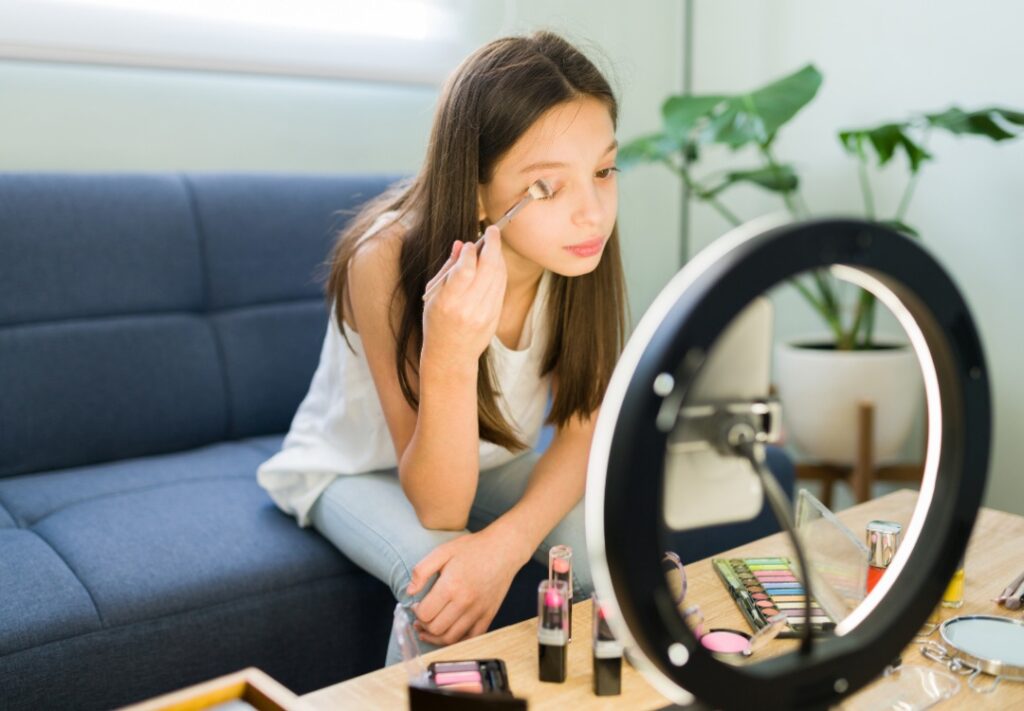
One of the most common questions parents ask is:
“When is my child old enough to wear makeup?”
There isn’t one perfect age, but there are important things every parent should know before kids and teens begin using eye cosmetics.
At Monarch Bay Optometry, we often see irritation, dry eye symptoms, clogged oil glands, and allergic reactions linked to makeup use, especially in younger patients whose eyes are still developing.
Why Kids and Teens Are More Vulnerable
Research shows that children and teens account for over 70% of cosmetic-related eye exposures reported to U.S. Poison Control Centers. Young children under age 6 make up the largest group, but teens are also frequently affected due to experimenting with cosmetics, eyelash products, and removers.
The eyes and eyelids of children and teenagers are simply more sensitive than adults.
Here’s why:
Developing Oil Glands
The meibomian glands (tiny oil glands along the eyelids) continue developing through adolescence. These glands are essential for healthy tears and comfortable eyes.
Heavy eyeliner use, especially on the inner eyelid “waterline”, can block these glands and contribute to early dry eye disease.
More Sensitive Eyelid Skin
Children and teens have thinner, more absorbent skin around the eyes, making them more prone to:
- Irritation
- Allergic reactions
- Chemical absorption from cosmetic ingredients
Higher Allergy Risk
Early exposure to cosmetic ingredients may increase the risk of lifelong sensitivities.
Common irritants and allergens include:
- Fragrances
- Preservatives
- Latex
- Formaldehyde-releasing ingredients
Contact Lens Risks
Many teens wear contact lenses, and makeup can easily contaminate lenses, increasing the risk of:
- Eye irritation
- Dryness
- Infections
- Blurry vision
A Growing Concern: Hormone-Disrupting Ingredients
Some eye makeup products and lash serums contain ingredients that may interfere with hormones.
This is especially concerning during puberty, when the body is already undergoing major hormonal changes.
Ingredients Parents Should Watch For
| Ingredient | Commonly Found In | Potential Concern |
| Prostaglandin analogues | Lash growth serums | Linked to dry eye, eyelid changes, iris darkening, and loss of orbital fat |
| Parabens | Mascara, creams, removers | Potential hormone-disrupting effects |
One particularly important concern is over-the-counter eyelash growth serums. Some contain prostaglandin-like ingredients associated with:
- Meibomian gland dysfunction
- Darkening of the skin around the eyes
- Iris discoloration
- Eyelid hollowing and fat loss
These changes can sometimes become long-lasting.
Makeup Removers Matter Too
Parents are often surprised to learn that makeup removers themselves can irritate the eyes.
Some removers contain:
- Alcohols
- Harsh preservatives
- Benzalkonium chloride (BAK)
These ingredients may worsen dryness and irritation, especially in teens already spending long hours on screens.
Another common issue is incomplete makeup removal. Sleeping in mascara or eyeliner can allow makeup particles to migrate into the eye and eyelid tissues, increasing inflammation and irritation.
Safer Makeup Habits for Teens
If your teen wants to wear makeup, here are some safer guidelines:
Choose Simpler Products
Look for:
- Fragrance-free formulas
- Hypoallergenic products
- Optometrist/Ophthalmologist-tested cosmetics
Avoid the Waterline
Applying eyeliner directly along the inner eyelid increases the risk of blocking oil glands.
Replace Makeup Regularly
- Mascara: every 3 months
- Eyeliner and shadows: every 6–12 months (liquid eyeliner every 3 months)
Old makeup can collect bacteria.
Never Share Makeup
Sharing products increases the risk of eye infections.
Remove Makeup Every Night
Gentle cleansing is essential.
Micellar water or gentle oil-free cleansers are often better tolerated than harsh removers.
Be Careful With Lash Serums
Many over-the-counter lash growth products are not ideal for teens and may carry unnecessary risks.
A Practical Age Guide
Every child matures differently, but here is a reasonable framework:
Under Age 12
Best to avoid regular eye makeup use.
Occasional use for performances or special events is usually fine with supervision.
Ages 12–15
Light, occasional makeup may be appropriate with:
- Good hygiene
- Gentle products
- Parent guidance
Avoid heavy daily use and lash growth serums.
Ages 16+
Teens can generally use makeup more safely if they:
- Practice proper hygiene
- Remove makeup nightly
- Replace products regularly
- Avoid sharing cosmetics
The Bottom Line
Eye makeup is not automatically harmful, but younger eyes are more sensitive and more vulnerable to irritation, clogged glands, allergies, and dry eye disease.
Parents don’t need to panic — but they should help teens make informed, healthy choices early.
If your child experiences:
- Redness
- Burning
- Excessive tearing
- Styes
- Dry eye symptoms
- Blurry vision
After starting makeup, it’s a good idea to schedule an eye evaluation.
What Parents and Teens Should Do Right Now
✅ Schedule a comprehensive eye exam — We can assess your teen’s ocular surface health and meibomian gland function before cosmetic habits cause silent damage.
✅ Read ingredient labels — Avoid products containing BAK, formaldehyde donors, parabens, phthalates, and synthetic prostaglandins.
✅ Never apply eyeliner to the waterline — This directly blocks meibomian gland openings.
✅ Remove all makeup every night — Use a gentle, preservative-free remover with eye-friendly ingredients.
✅ Ask your optometrist — Before purchasing any eyelash serum or eye cosmetic, check with your eye care provider. Many products marketed as “natural” or “safe” have never been tested near the eyes.
📅 Book Your Teen’s Eye Exam Today
At Monarch Bay Optometry in Dana Point, we don’t just check vision, we evaluate the full health of your child’s ocular surface, including the effects of cosmetic use on the tear film and eyelid health. We’re always happy to help families navigate eye health safely, including questions about cosmetics, contact lenses, dry eye, and eyelid care.
Don’t wait for symptoms to appear. Silent damage to the meibomian glands and ocular surface can begin long before your teen notices anything is wrong.
📍 Monarch Bay Optometry | Dana Point, CA
📞 949. 487. 3937
🌐 monarchbayoptometry.com
📅 Book Online!
Serving Dana Point, San Clemente, Laguna Beach, and the greater South Orange County community.

