

What Is Demodex … And Why Should You Care?
Here’s something most people don’t know: tiny microscopic mites called Demodex naturally live on almost everyone’s eyelashes and skin. In small numbers, they’re mostly harmless. But when they overpopulate, which happens more easily than you’d think, they can cause real problems for your eyes and lids.
We’re talking:
- Itchy, irritated eyelids
- Crusty or greasy lash roots
- Red, inflamed lid margins
- Dry, gritty, or burning eyes
- Recurring styes (those painful bumps on your lid)
Sound familiar? You might be dealing with Demodex blepharitis (blef-uh-RYE-tis) , inflammation of the eyelids caused by a Demodex overgrowth, and not even know it.
The good news? It’s manageable. And at Monarch by Optometry in Dana Point, we help patients tackle it every day.
The Two Types of Demodex Mites on Your Eyes
Not all Demodex are the same. Two species live on your face, and both can affect your eyes in different ways.
| Mite | Where It Lives | What It Causes |
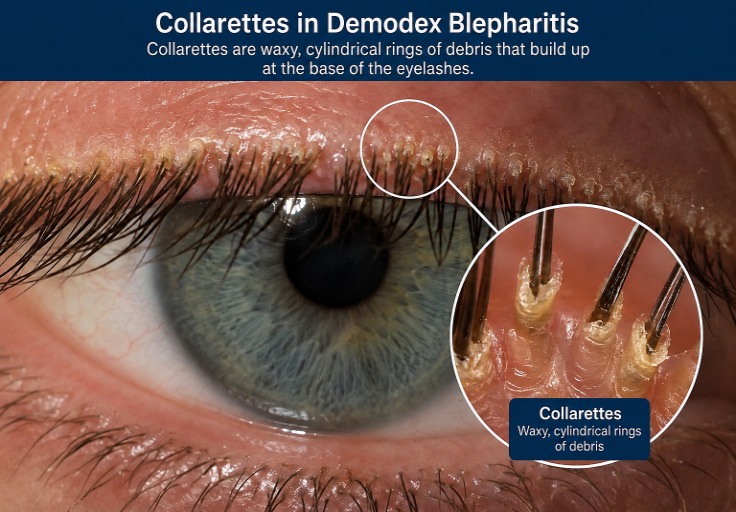
| Demodex folliculorum | Inside the hair follicle (the lash root) | Lash loss, lid inflammation, cylindrical dandruff at lash base |
| Demodex brevis | In the oil glands (meibomian glands) deeper in the lid | Blocked oil glands, dry eye, lid margin disease |
Both types feed on dead skin cells and oils which is exactly why dirty lashes, heavy makeup, and lash extensions create the perfect environment for them to thrive.
Who Is Most at Risk?
Demodex can affect anyone, but certain groups are more vulnerable.
Higher risk if you:
- ✦ Are over 40 (Demodex numbers naturally increase with age)
- ✦ Wear eye makeup regularly without fully removing it
- ✦ Have lash extensions (more on this below and it’s a big one)
- ✦ Have oily skin or rosacea
- ✦ Have a weakened immune system
- ✦ Don’t have a consistent eyelid cleaning routine
- ✦ Share eye makeup or brushes with others
🚨 Lash Extensions and Demodex: What You NEED to Know
This section is for all the lash extension lovers in Dana Point and we know there are many of you! 💕
Lash extensions are beautiful, but they come with a hidden risk that most lash salons won’t tell you about.
Here’s why extensions increase your Demodex risk:
- They create more surface area. More lash = more places for mites to hide and lay eggs.
- They trap debris. Makeup, oils, dead skin cells, and environmental dust get caught at the lash base. Exactly what Demodex feeds on.
- People are afraid to clean them. Many extension wearers avoid washing their lashes aggressively because they don’t want to loosen the glue. This leads to buildup.
- The adhesive itself can irritate the lid. Irritated lids produce more inflammation, which can worsen Demodex symptoms.
- Salon hygiene matters. Shared tools and improper sanitation at lash studios can transfer mites between clients.
The result? Extension wearers often develop the classic signs of Demodex, itching, crusting, and inflammation, and mistake it for an allergic reaction to the glue.
How to Safely Clean Lash Extensions
The key is using the right products, not just any cleanser.
⚠️ Avoid oil-based makeup removers and cleansers. They break down lash adhesive AND create an oily environment that Demodex loves.
What to use instead:
- ✅ Hypochlorous acid (HOCl) spray: gentle, antimicrobial, safe for extensions. Spray on a clean spoolie or cotton pad and gently sweep along the lash line.
- ✅ Tea tree oil-based lid foam or wipes: tea tree oil (specifically its active compound, terpinen-4-ol) has been shown to reduce Demodex populations. Use products formulated for eyelids and never apply undiluted tea tree oil directly to your eyes.
- ✅ Foaming lash extension cleanser: look for oil-free formulas designed specifically for extensions.
How often? Every single day. No exceptions.
Technique for extensions:
- Dampen a clean spoolie brush
- Apply your lid cleanser
- Gently brush along the lash line in a downward motion
- Rinse with cool water or wipe clean
- Let lashes air dry or use a clean, cool fan setting
The Complete Demodex Cleaning Guide (For Everyone)
Whether you have extensions or natural lashes, here’s how to build a lid hygiene routine that keeps Demodex in check.
🌿 Option 1: The Daily Maintenance Routine (For Most People)
Best for: People with no current symptoms who want to prevent Demodex
What you need: Hypochlorous acid spray OR a gentle, commercially available lid scrub wipe
How to do it:
- Wash your hands thoroughly
- Close one eye
- Apply product to a cotton pad or use a pre-moistened lid wipe
- Gently scrub along the lash line in a back-and-forth motion for 15–20 seconds
- Repeat on the other eye with a fresh pad
- Rinse with clean water
- Do this once daily, ideally at night before bed
🌿 Option 2: The Tea Tree Oil Routine (For Mild Symptoms)
Best for: People with occasional itching, mild crusting, or early signs of Demodex
Tea tree oil, specifically its active ingredient terpinen-4-ol, has been shown in research to be effective against Demodex mites. However, it must be diluted properly for use near the eyes.
What to use: Pre-formulated tea tree oil lid scrubs or foams (like Cliradex, OCuSOFT Lid Scrub Plus, or similar products). These are already diluted to a safe concentration.
How to do it:
- Wash your hands
- Apply the tea tree lid scrub to a cotton pad or use the foam directly
- Close your eye and gently scrub the lash line for 30 seconds
- Pay special attention to the base of the lashes. This is where Demodex eggs (called “cylindrical dandruff”) accumulate
- Rinse thoroughly
- Use twice daily (morning and night) during active symptoms, then drop to once daily for maintenance
💡 Pro tip: Warm compresses before lid scrubs help loosen debris and open oil glands. Apply a warm, damp cloth to closed eyes for 5 minutes first.
🌿 Option 3: The Intensive Routine (For Moderate to Severe Symptoms)
Best for: People with significant crusting, redness, styes, or confirmed Demodex blepharitis
This routine should be done under the guidance of your eye doctor because at this level, you may need prescription treatment in addition to lid hygiene.
In-office options your eye doctor may recommend:
- BlephEx or in-office lid debridement: a professional deep-cleaning of the lash line that removes mite debris and biofilm
- Prescription lotilaner ophthalmic solution (Xdemvy): the first FDA-approved treatment specifically for Demodex blepharitis, shown in clinical trials to significantly reduce mite counts and symptoms 4 9
- Topical ivermectin: another option shown to reduce Demodex populations
- Topical permethrin: used in some cases for Demodex management
At-home intensive routine:
- Warm compress with warming mask: 10 – 15 minutes
- Tea tree oil lid scrub: twice daily
- Hypochlorous acid spray: after scrubbing, as a finishing antimicrobial rinse
- Follow all prescription instructions from your eye doctor
Teaching Your Kids Good Lash Hygiene
Yes, kids can get Demodex too, especially if they’re active outdoors, share pillowcases, or have skin conditions like eczema or rosacea.
Kid-friendly lash hygiene tips:
- 🧼 Make it part of bath time. Teach kids to gently wash their closed eyelids with a mild, tear-free baby shampoo or a gentle lid cleanser.
- 🛏️ Change pillowcases weekly. Demodex can transfer to bedding.
- 🚫 No sharing eye makeup, brushes, or eye drops ever!
- 🧴 Keep their face clean. Regular face washing reduces the oils and dead skin cells that Demodex feeds on.
- 👁️ Watch for warning signs: If your child is rubbing their eyes constantly, has crusty lashes in the morning, or complains of itchy eyes, bring them in for an eye exam.
Note for parents: If your child wears eye makeup for dance recitals, theater, or sports, make sure it’s fully removed the same night with a gentle, oil-free cleanser.
Daily Habits That Help Prevent Demodex (For the Whole Family)
Small changes make a big difference. 1 3 6
| Habit | Why It Helps |
| Remove all eye makeup before bed | Leftover makeup = food for Demodex |
| Wash pillowcases weekly in hot water | Reduces mite transfer during sleep |
| Replace mascara every 3 months | Old mascara harbors bacteria and mites |
| Never sleep in contacts | Reduces overall eye irritation and infection risk |
When Is It Time to See an Eye Doctor?
Home hygiene is powerful but sometimes you need professional help. Come see us at Monarch by Optometry if you notice:
- 👁️ Persistent itching or burning that doesn’t improve with lid scrubs
- 👁️ Visible crusting or “dandruff” at the base of your lashes
- 👁️ Lashes falling out or growing in the wrong direction
- 👁️ Recurring styes or chalazia (cysts on the eyelid)
- 👁️ Blurry vision or increased light sensitivity
- 👁️ Symptoms that keep coming back despite cleaning
These can all be signs of active Demodex blepharitis and there are now FDA-approved treatments that can make a real difference.
📍 Ready to Get Your Lash Health Checked?
At Monarch by Optometry in Dana Point, we offer comprehensive eye exams that include evaluation of your eyelid health and lash line. Whether you’re dealing with symptoms right now or just want to make sure your lash extension routine isn’t putting your eyes at risk. We’re here for you.
📞 Call us or book online today.
📍 Serving Dana Point and the surrounding South Orange County community.
Your eyes deserve more than just a pretty lash line. They deserve to be healthy.
This blog is for educational purposes and is not a substitute for professional medical advice. Please consult your eye care provider for diagnosis and treatment.
#DanaPoint #SouthOrangeCounty #EyeHealth #LashExtensions #Demodex #DryEye #LidHygiene #MonarchOptometry #EyeCare #LashCare #BlepharitisAwareness #HealthyLashes #OrangeCountyEyeDoctor
References

